Cats' Failure in Mirror Test: Lack of Self-Awareness or Methodological Error?

Jun 12, 2025 By

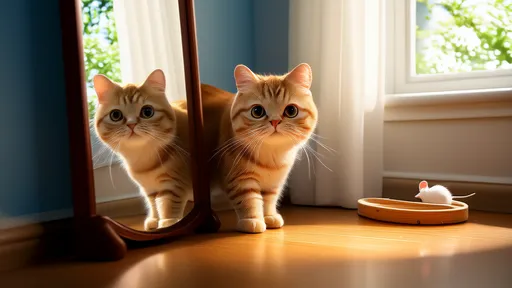
The so-called "mirror test" has long been considered a benchmark for evaluating self-awareness in animals. When a creature recognizes itself in a mirror, scientists often interpret this as evidence of higher cognitive function. Yet, one of the most beloved and enigmatic domestic animals—the cat—consistently fails this test. This raises an intriguing question: Does a cat’s inability to pass the mirror test indicate a lack of self-awareness, or is the test itself fundamentally flawed when applied to felines?

For decades, researchers have used the mirror test to assess self-recognition in various species. The procedure is straightforward: an animal is marked with a visible but odorless dye in a place it can only see in a mirror. If the animal notices the mark and attempts to investigate or remove it while looking at its reflection, it is assumed to recognize itself. Great apes, dolphins, elephants, and even some birds like magpies have passed this test. Cats, however, show little to no interest in their reflections beyond initial curiosity or occasional aggression.

Some scientists argue that the cat’s failure to pass the mirror test suggests a lack of self-awareness. They propose that self-recognition requires a level of cognitive complexity that cats may not possess. Unlike primates or dolphins, which live in complex social structures, cats are solitary hunters by nature. Their evolutionary priorities may not have favored the development of self-recognition in the same way. If a cat does not need to distinguish itself from others in a social hierarchy, perhaps the neural mechanisms for self-awareness never evolved to the same degree.

However, an alternative perspective challenges the validity of the mirror test itself—at least when applied to cats. Critics argue that the test is anthropocentric, designed with human-like cognition in mind. A cat’s perception of the world differs significantly from ours. Their vision is optimized for detecting movement in low light, not for scrutinizing static reflections. Additionally, cats rely heavily on scent and touch rather than sight for identification. A mirror provides no olfactory information, rendering it irrelevant in a cat’s sensory world.

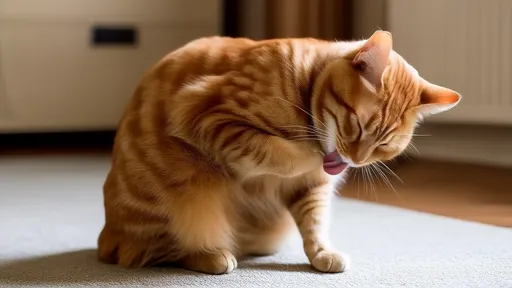
Behavioral observations further complicate the matter. Anyone who has lived with a cat knows they are far from indifferent to their environment. They exhibit problem-solving skills, memory, and even what appears to be deception—traits that suggest a sophisticated mind. If cats truly lacked self-awareness, would they groom themselves meticulously, adjust their behavior based on past experiences, or display jealousy when attention is given to another pet? These behaviors imply a sense of self, even if it doesn’t manifest in a mirror.

Another possibility is that cats simply do not care about their reflections. Unlike social animals that may use mirrors to understand their place in a group, a cat’s solitary nature means it has little evolutionary incentive to engage with its own image. The mirror test assumes that an animal will be motivated to investigate a mark on its body, but what if the cat sees the mark and decides it’s unimportant? This wouldn’t prove a lack of self-awareness—only a lack of interest in the test’s parameters.

Recent studies in animal cognition have begun to explore alternative methods for assessing self-awareness that don’t rely on mirrors. For example, experiments involving body awareness—such as navigating obstacles or understanding the space their body occupies—have shown promise. Cats excel in these tasks, demonstrating an implicit understanding of their physical form. This suggests that self-awareness may exist in forms that traditional tests fail to capture.

Ultimately, the question of whether cats possess self-awareness may be missing the point. The mirror test is just one tool, and its limitations are becoming increasingly apparent. Rather than asking why cats fail, perhaps we should ask whether the test is the right way to measure their cognitive abilities. As our understanding of animal minds expands, so too must our methods for studying them. The mystery of the cat’s mind remains unsolved—but that’s precisely what makes it so fascinating.
Recommend Posts
Pet

New Manifestations of Separation Anxiety in Cats: The Difference Between Destructive Behavior and Silent Starvation

By /Jun 12, 2025

The quiet revolution in feline behavior studies has uncovered surprising new manifestations of separation anxiety in domestic cats. Where we once imagined distressed meowing or frantic greetings as the primary symptoms, veterinarians now document two divergent behavioral pathways that leave owners perplexed: destructive rampages versus silent withdrawal. These polarized responses reveal fundamental differences in how individual cats process emotional distress when separated from their human companions.
Pet

Can Cats Understand Human Pointing Gestures? Decoding the Communication Gap in Body Language

By /Jun 12, 2025

For centuries, cats have been shrouded in an aura of mystery, often labeled as aloof or indifferent compared to their canine counterparts. Yet, emerging research suggests that our feline companions might understand us far better than we think—particularly when it comes to human gestures like pointing. The question of whether cats comprehend human pointing isn’t just academic; it reveals deeper layers of cross-species communication and the blind spots in our assumptions about animal cognition.
Pet

Empathy Experiment with Cats: Can They Sense Their Owner's Sadness?

By /Jun 12, 2025

For centuries, cats have been enigmatic companions, often painted as aloof and indifferent to human emotions. Yet, anyone who has shared a home with a feline knows there’s more beneath the surface. Recent scientific inquiries into feline behavior have sought to answer a compelling question: Can cats truly sense human sadness? The emerging research suggests that the bond between cats and their owners might be far more nuanced than previously assumed.
Pet

Cats' Failure in Mirror Test: Lack of Self-Awareness or Methodological Error?

By /Jun 12, 2025

The so-called "mirror test" has long been considered a benchmark for evaluating self-awareness in animals. When a creature recognizes itself in a mirror, scientists often interpret this as evidence of higher cognitive function. Yet, one of the most beloved and enigmatic domestic animals—the cat—consistently fails this test. This raises an intriguing question: Does a cat’s inability to pass the mirror test indicate a lack of self-awareness, or is the test itself fundamentally flawed when applied to felines?
Pet

Post-Traumatic Stress Disorder: The Destruction of Domestic Cats' Trust Mechanism by Roaming Experiences

By /Jun 12, 2025

The soft padding of paws across hardwood floors, the contented purring in sunlit corners—these are the hallmarks of a domesticated cat at peace. Yet for countless felines who have endured the trauma of homelessness, these behaviors often give way to skittishness, hypervigilance, and an enduring mistrust of humans. The psychological scars left by life on the streets run deep, reshaping a cat's fundamental capacity for trust in ways that challenge even the most patient caregivers.
Pet

Chronic Pain Signals in Cats: Excessive Grooming May Be a Distress Signal

By /Jun 12, 2025

For years, cat owners have marveled at their pets' fastidious grooming habits. The sight of a cat meticulously licking its paws or smoothing down its fur is so commonplace that we rarely stop to consider what this behavior might signify beyond basic hygiene. However, emerging veterinary research suggests that excessive grooming in felines may be far more than just routine self-care - it could be a silent cry for help from an animal suffering chronic pain.
Pet

Feline Attachment Style Assessment: How Are Secure vs. Avoidant Types Formed?

By /Jun 12, 2025

The bond between cats and their human companions is a complex and fascinating dynamic, shaped by a variety of factors ranging from early life experiences to inherent personality traits. Much like humans, cats exhibit distinct attachment styles—primarily secure and avoidant—which influence how they interact with their caregivers and navigate their environment. Understanding how these attachment types form can provide valuable insights into feline behavior and strengthen the human-cat relationship.
Pet

Why Do Cats Mimic Their Owners' Sleeping Positions?

By /Jun 12, 2025

Have you ever noticed your cat curling up in the exact same position as you while you nap? Or perhaps stretching out on the bed, mirroring your relaxed posture? This phenomenon, where cats seem to imitate their owners' sleeping positions, is more than just a coincidence—it’s a fascinating display of bonding and instinct. Known as limb synchrony or postural mimicry, this behavior reveals deeper insights into the relationship between humans and their feline companions.
Pet

Cats' Causal Reasoning Ability: Knocking Over a Cup = Gaining Attention?

By /Jun 12, 2025

Anyone who has shared their home with a feline companion has likely witnessed the phenomenon: a delicate paw swiping at a glass perched precariously on the edge of a table, followed by the inevitable crash. The cat saunters away, perhaps glancing back with what we imagine to be smug satisfaction, as their human scrambles to clean up the mess. This behavior raises an intriguing question: do cats understand that knocking things over leads to attention, or is it mere coincidence?
Pet

Human Tone Experiment: Do Cats Prefer High-Frequency Baby Talk" or Low, Soothing Sounds?

By /Jun 12, 2025

For decades, cat owners have debated the best way to communicate with their feline companions. Some swear by high-pitched, sing-song "baby talk," while others insist a calm, low-pitched voice works better. Recent research delving into feline vocal preferences has shed new light on this age-old question, revealing surprising insights into how cats perceive and respond to different human tones.
Pet

Feline Social Selectivity: Why Do Cats Only Act Affectionate Towards Certain People?

By /Jun 12, 2025

Anyone who has shared their home with a cat knows these enigmatic creatures don’t bestow their affection equally. Some visitors might receive an indifferent glance, while others are greeted with head-butts, purrs, and the full force of feline charm. This selective behavior isn’t random—it’s a fascinating interplay of biology, psychology, and individual experience that shapes why cats reserve their sweetest gestures for certain people.
Pet

Feline Hallucination Hunting" Syndrome: Biting at Air as a Warning of Neurological Disorders?

By /Jun 12, 2025

In households around the world, cat owners often chuckle at their feline companions' sudden bursts of energy—pouncing on invisible prey or swatting at empty air. This behavior, commonly dismissed as playful antics, has recently sparked scientific curiosity. Termed "hallucinatory hunting syndrome," these episodes might be more than just quirky cat behavior. Emerging research suggests they could signal underlying neurological issues that warrant closer attention.
Pet

Cat Response to Names: Recognizing Personal Symbols or Intonation Patterns?

By /Jun 12, 2025

Anyone who has ever called a cat by name knows the familiar scenario: the feline may flick an ear, turn its head, or completely ignore you. This everyday interaction raises an intriguing scientific question—do cats actually recognize their names as personal identifiers, or are they simply responding to the tone and pattern of human speech? Recent studies have delved into this mystery, uncovering fascinating insights into feline cognition and the ways our pets perceive the sounds we make.
Pet

The Object Permanence Experiment in Cats: Are Disappearing Toys Really Forgotten?

By /Jun 12, 2025

For decades, the concept of object permanence has fascinated both pet owners and scientists alike. When a favorite toy disappears behind the couch or vanishes under a blanket, does the family cat truly forget its existence? Recent studies suggest feline cognition may be far more complex than we've traditionally assumed.
Pet

The Unspoken Rules of Shared Litter Boxes: The Symbolism of Feces Covering Behavior in Power Dynamics

By /Jun 12, 2025

In the seemingly mundane world of domestic cats, a subtle power struggle unfolds daily in the shared litter box. The act of covering waste, often dismissed as mere instinct, reveals complex social hierarchies and unspoken rules among feline housemates. What appears to humans as simple hygiene maintenance actually serves as a sophisticated system of communication and dominance assertion.
Pet

Is the Cat's Apology" Behavior: Slow Blinking Really a Reconciliation Signal?

By /Jun 12, 2025

Anyone who has shared their home with a feline companion knows the peculiar dance of communication that exists between humans and cats. Unlike dogs, whose emotions often wear their hearts on their sleeves, cats have long been considered enigmatic creatures, their feelings hidden behind inscrutable golden eyes. Yet recent research into feline behavior suggests they may be more transparent than we think—particularly when it comes to reconciliation. One gesture in particular has captured the attention of scientists and cat lovers alike: the slow blink.
Pet

Cross-species Learning": Cats Acquire Dogs' Social Strategy of Wagging Tails for Begging Food

By /Jun 12, 2025

In a fascinating display of cross-species social learning, researchers have documented domestic cats adopting canine-style tail wagging to solicit food from humans—a behavior previously considered unique to dogs. This unexpected adaptation challenges long-held assumptions about feline social intelligence and reveals the fluidity of interspecies communication. The phenomenon was first systematically observed in multi-pet households where cats and dogs cohabitated for extended periods.